
Downspouts Installed Where Water Exits Safely
Downspout Installation in Clever for homes with water pooling at foundations or overloaded gutter outlets
Townsend Seamless Gutter Company installs downspouts for homeowners in Clever who are seeing water back up at gutter seams, spill over fascia boards, or collect against the foundation after rain. A gutter system without properly placed downspouts—or with downspouts that terminate too close to the house—routes concentrated water directly where structural damage begins. Every installation starts with evaluating the volume of water each gutter run needs to discharge based on roof pitch and square footage.
In southwest Missouri, clay-heavy soils common to this region absorb water slowly, which means surface drainage from a short or misaligned downspout stays near the foundation longer than it would in sandier soil. During heavy spring rain events, a single undersized or misplaced downspout outlet can saturate the soil against a footer within minutes. Proper downspout installation in this area accounts for both discharge volume and where that water goes once it leaves the elbow—whether that's a splash block, underground extension, or a graded path away from the structure.
Request an on-site evaluation to review your current gutter outlet placement and identify where new downspouts would address active drainage problems.
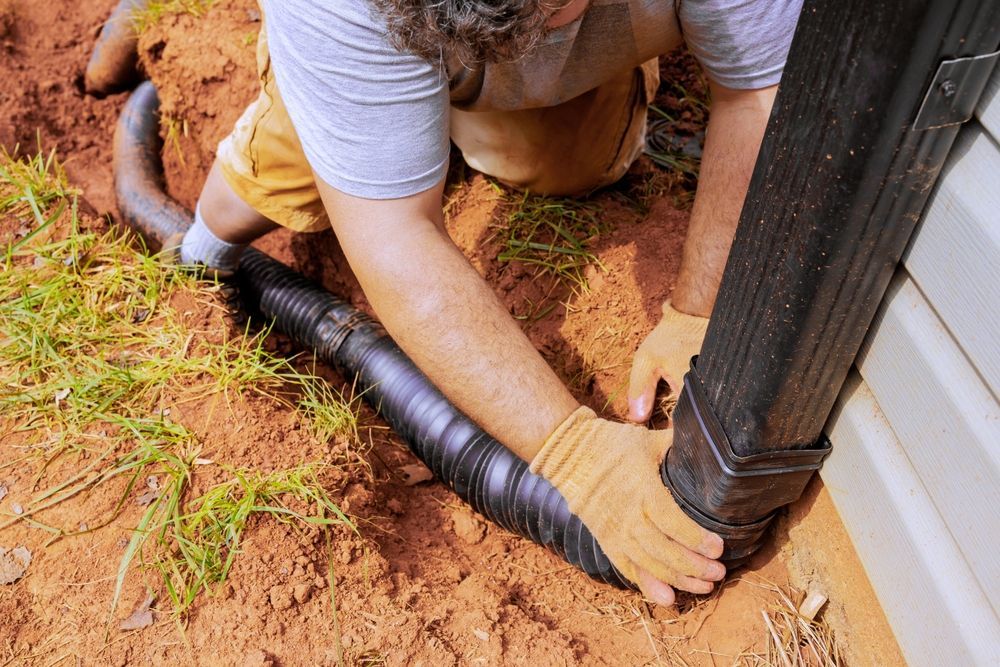
How Downspout Placement Controls Water Discharge
Downspout installation involves more than cutting a hole in the gutter and attaching a pipe. The outlet location is determined by gutter run length—most runs over 35 feet require a downspout at each end to prevent overflow at the midpoint during peak flow. Elbows are fitted at the base to direct water away from the foundation, and the angle and number of bends affect how cleanly water exits during high-volume rain rather than backing up inside the vertical section.
Once the installation is complete, you'll notice water no longer sheets over the gutter edge during moderate rain, and the soil immediately around the foundation dries out between storms rather than staying saturated. Downspout extensions—whether flexible, rigid, or buried—are part of what Townsend Seamless Gutter Company assesses during each installation to confirm water terminates at least four to six feet from the foundation, which is the minimum distance required to keep discharge water from migrating back toward the footing.
The number of downspouts a home needs depends on roof drainage area, gutter width (typically five-inch or six-inch profile), and the slope of surrounding grade. Homes with flat or negative-grade yards adjacent to the foundation often require extended downspout runs or underground drain connections rather than surface outlets alone. These factors are assessed during the site visit before any installation work begins.

Common Questions About Downspout Installation
These questions address what homeowners in Clever and the surrounding area most commonly ask before scheduling downspout installation or extension work.
How far should a downspout extend from the house?
In most cases, the discharge point should be a minimum of four feet from the foundation, and six feet or more is preferable when the yard slopes toward the house or soil drainage is slow—both common conditions in southwest Missouri's clay-dominant terrain.
What determines how many downspouts a home needs?
Gutter run length and roof catchment area drive this calculation—a standard rule used in the industry is one downspout outlet per 20 to 30 linear feet of gutter, adjusted for roof pitch and local rainfall intensity.
How is a downspout connected to an underground drain?
A rigid elbow at the base of the downspout connects to a pop-up emitter or catch basin via a buried PVC pipe, allowing water to exit well away from the structure without surface erosion or pooling.
When is the best time to schedule downspout installation?
Scheduling before spring rain season allows any drainage issues to be corrected before the highest-volume weather events, though installations can be completed year-round in most conditions.
Why does water overflow at the gutter midpoint even when downspouts are clear?
This typically indicates the gutter run is too long for a single outlet—a second downspout installed at the opposite end of the run distributes discharge load and stops the midpoint overflow pattern.
Townsend Seamless Gutter Company can walk through your property's specific drainage layout and provide a written assessment of downspout placement, extension requirements, and outlet termination options—call (417) 299-1607 to schedule that visit.