
Debris Blocking Solved Without Cheap Screen Systems
Gutter Guard Installation in Springfield for homeowners dealing with frequent clogging, high tree coverage, and leaf screen systems that have already warped or failed
The Springfield area's mix of oak, sweetgum, and pine generates the kind of sustained debris load that exposes the difference between a quality gutter guard system and a home improvement store screen that gets pushed down by the first heavy branch drop of the season. Townsend Seamless Gutter Company installs micro mesh gutter guard systems—not the flat plastic or aluminum screens sold at big-box retailers—and evaluates roof conditions and nearby tree coverage before selecting the appropriate installation approach for each specific property. That assessment step matters because a guard system that performs well on a roofline with full sun exposure behaves differently on a north-facing slope where organic debris stays wet and heavy longer.
Installation involves securing the micro mesh system to the existing or newly installed gutter channel at the correct angle to direct water in while shedding debris over the edge. After the system is mounted, water flow is tested to confirm performance before the job is finished. This testing step catches installation errors that only reveal themselves under actual flow conditions—a guard that looks correctly positioned but sits at a slightly elevated angle at the front edge can allow surface tension to carry debris into the channel rather than shedding it.
Schedule an on-site evaluation to assess tree coverage and roof conditions before selecting a guard system configuration for your property.
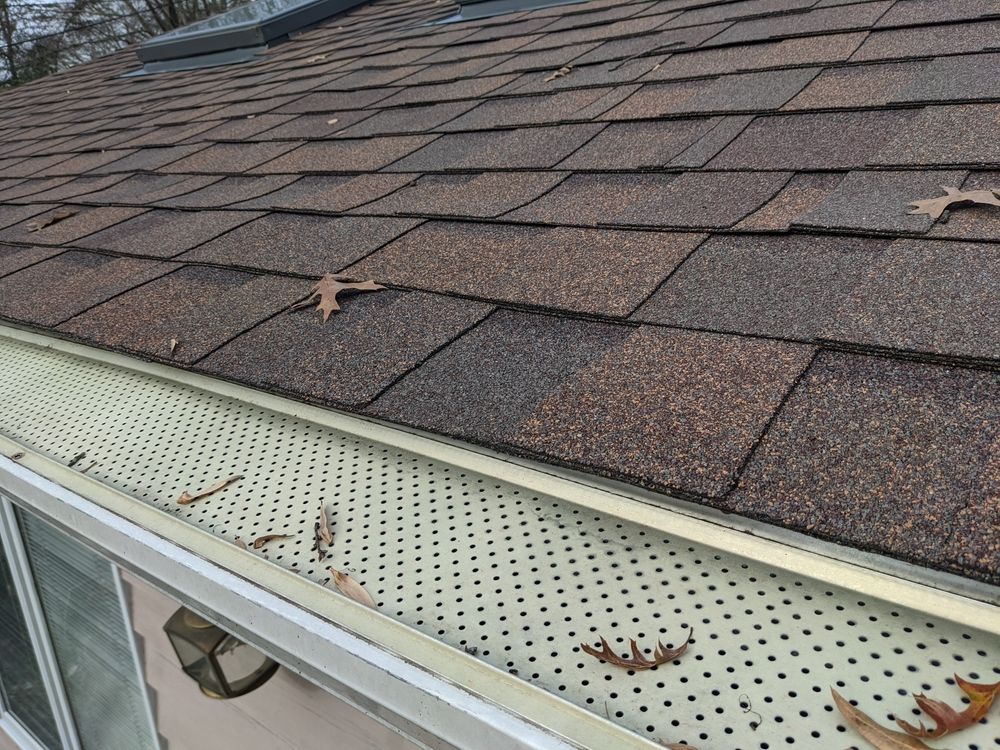
The Difference Between Quality Guards and Budget Screens
Micro mesh systems with aluminum frames outperform vinyl-frame alternatives in a specific, observable way: aluminum holds its shape through the heat cycling that causes vinyl frames to soften and warp during summer months in Missouri's climate. A warped frame pulls the mesh away from the gutter channel edge, creating gaps that debris enters freely—which is exactly the failure pattern seen in Leaf Filter installations that Townsend Seamless Gutter Company is periodically called in to remove and replace. Aluminum-framed micro mesh installed correctly maintains its contact with the gutter channel through seasonal temperature variation in a way that vinyl-frame systems do not.
After installation is complete, the gutter channel below the guard remains free of the debris accumulation that previously required seasonal cleaning, and downspouts continue to flow without the blockages that formed at elbow connections when leaf matter was reaching the channel unimpeded. You'll notice that the overflow that occurred during peak debris season—leaves hitting the gutter and backing up against the fascia—stops because debris sheds over the guard edge rather than accumulating at the channel inlet. The system carries a manufacturer guarantee on the micro mesh product itself.
The cost difference between a properly installed aluminum-frame micro mesh system and a Leaf Filter installation of equivalent coverage is significant—Townsend Seamless Gutter Company installs at approximately a quarter of what Leaf Filter charges for comparable protection. That difference reflects the absence of a national franchise overhead structure, not a difference in product quality. Homeowners who have already paid for a Leaf Filter installation that has since warped have the option of having that system removed and replaced with an aluminum-frame alternative that holds its position correctly.

Common Questions About Gutter Guard Installation
These questions come up consistently from Springfield and Nixa homeowners who are comparing guard options or recovering from a previous installation that didn't perform as expected.
Why are micro mesh systems more effective than flat screen guards for this area?
The oak and sweetgum debris common in the Springfield region includes small seeds, pollen clusters, and shingle grit that passes directly through the larger openings in standard screens—micro mesh openings are sized to allow water through while stopping the fine debris that flat screens miss.
How is the installation evaluated before the job is considered complete?
Water flow is tested after the guard system is secured to confirm that surface tension is directing water into the channel rather than running over the front edge, and that the mesh is sitting flush against the gutter lip without gaps where debris could enter.
What makes aluminum-frame guards perform better than vinyl-frame systems in Missouri's climate?
Summer temperatures in this region cause vinyl frames to soften and take on a slight bow that pulls the mesh away from the gutter channel edge—aluminum frames maintain their shape through the same heat cycling, keeping the guard seated correctly against the gutter lip throughout the season.
When does it make sense to replace an existing gutter guard system rather than clean it?
When a vinyl-frame system has visibly warped away from the gutter channel, or when mesh has separated from the frame at the attachment points, cleaning the existing system doesn't restore the seal between the guard and the channel that prevents debris from bypassing the guard entirely.
How does nearby tree coverage affect which guard system is appropriate?
Properties with heavy canopy directly over the roofline generate debris volume and weight that requires a guard system with a structurally rigid frame—lighter-duty screens compress under the weight of wet leaf accumulation, which reduces the angle of shed and allows buildup to form at the guard surface rather than falling clear.
Townsend Seamless Gutter Company installs micro mesh gutter guard systems across Springfield and Nixa with 42 years of gutter-specific knowledge behind every installation decision—call (417) 299-1607 to arrange an evaluation of your roof conditions and tree coverage before selecting the right system for your home.