
Gutters Sized and Sloped for Real Rainfall Volume
Seamless Gutter Installation in Springfield for roof drainage systems that overflow, pull away from fascia, or lack adequate downspout spacing for large roof sections
Roof square footage determines what a gutter system actually needs to carry—and that calculation is where most installations go wrong. Townsend Seamless Gutter Company measures your roof's surface area before selecting gutter size, because installing a 5-inch gutter on a roof that generates enough volume to require a 6-inch system means the new installation overflows just like the old one did. For roofs where downspout spacing exceeds 60 feet between outlets, the move to 6-inch gutters is a functional requirement, not an upsell. This is the kind of decision that separates a system that lasts from one that fails in the first heavy rain of the season.
Installation involves fabricating seamless gutters on-site from aluminum stock, which eliminates the joints that sectional systems develop leaks through over time. Hidden hangers are set at spacing that accounts for the weight of standing water and debris rather than minimum code requirements, and slope is established along the full run to direct flow toward downspout locations rather than allowing water to pool at low points in the channel. Downspout positions are chosen based on where water can discharge away from the foundation, not simply where they're easiest to place.
Request an on-site measurement to determine the correct gutter size and downspout configuration for your specific roof layout.
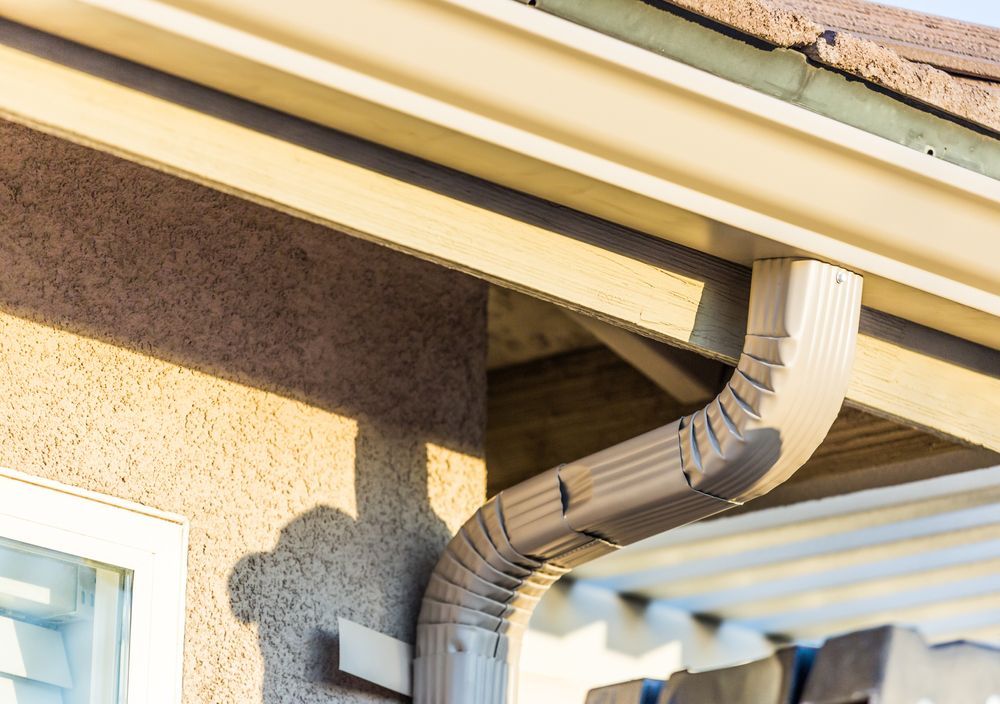
What Proper Seamless Gutter Installation Requires
The aluminum construction used by Townsend Seamless Gutter Company is paired with stainless steel fasteners, which resist the corrosion cycle that causes standard galvanized hardware to fail at the hanger connection point—typically within several years in climates with significant rainfall variation across seasons. The seamless fabrication process means each gutter run is cut to the exact length needed for your roofline, with no overlapping seams that collect debris or allow water to wick behind the back wall toward the fascia board.
Once installation is complete, downspouts carry volume away from the home at designed discharge points, and you'll notice the absence of water sheeting down exterior walls or pooling against the foundation during rain. The roofline looks clean without exposed spike heads or visible hanger hardware, and the channel runs without visible sag between attachment points—a reliable indicator that hanger spacing was set correctly for the span.
Roofing and construction companies in the Republic and Springfield area rely on this installation approach without reviewing the specifications first because the sizing and slope decisions are made correctly the first time. Homeowners choosing between 5-inch and 6-inch systems should understand that the roof measurement drives that decision—not preference or price difference alone.

What Property Owners Usually Ask About New Gutters
These questions reflect what Springfield and Republic homeowners typically ask when evaluating a new seamless gutter installation for the first time.
How is the correct gutter size determined for my home?
Roof square footage is measured first, then downspout spacing is calculated based on that area—roofs with runs longer than 60 feet between downspouts require 6-inch gutters to move the volume that collects during a heavy rain event without overflowing.
What makes seamless gutters different from standard sectional gutters?
Sectional gutters rely on overlapping joints sealed with caulk, and those joints are the first points to separate and leak—seamless gutters are fabricated in single continuous runs, which removes those failure points entirely.
Why are hidden hangers used instead of spikes?
Spikes driven through the front of the gutter face loosen over time as the wood behind them compresses through seasonal expansion and contraction cycles, while hidden hangers clip to the gutter channel and screw into the fascia at a point that holds under the weight of a full gutter.
How does Springfield's rainfall pattern affect downspout placement?
The region's high-volume spring rain events mean downspout discharge points need to direct water away from foundation grade rather than simply routing it off the roofline—improper discharge positioning is one of the most common causes of basement moisture issues in this area.
What factors affect the cost of seamless gutter installation?
Roof perimeter length, gutter size selection, number of downspouts required, and whether existing mounting hardware needs to be replaced before installation all affect the total—an on-site measurement provides accurate numbers rather than estimates built on averages.
Townsend Seamless Gutter Company has fabricated and installed seamless gutter systems for 42 years across Springfield and the surrounding region—call (417) 299-1607 to arrange a roof measurement and get a configuration that's sized correctly for your drainage needs.