
Old Gutter Systems Removed and Rebuilt Correctly
Gutter Replacement in Springfield for aging systems with persistent leaks, fascia damage from moisture intrusion, and channels that no longer drain correctly regardless of cleaning
There's a specific point where a gutter system stops being a repair candidate and becomes a liability to the structure it's supposed to protect. When a Springfield homeowner has addressed the same leaking joint or sagging section repeatedly, or when the fascia board behind the mounting points shows soft spots and discoloration that point to extended moisture exposure, the replacement conversation starts in a different place than a standard estimate. Townsend Seamless Gutter Company begins every replacement job by removing the aging system first—before any new hardware goes up—so the fascia condition can be assessed directly rather than assumed.
Replacement involves removing the old gutter and downspout system completely, then inspecting the fascia boards for hidden moisture damage that wasn't visible from below. Fascia that has softened or separated from the rafter tails beneath it needs to be identified before new gutters are mounted, because installing a replacement system against compromised wood simply restarts the same failure cycle. Once the mounting surface is confirmed sound, seamless gutters are fabricated on-site to the exact dimensions of your roofline and installed with hidden hangers and stainless steel fasteners that resist the corrosion patterns common in this climate.
Request a replacement assessment to evaluate your current system and the condition of the fascia before scheduling installation.
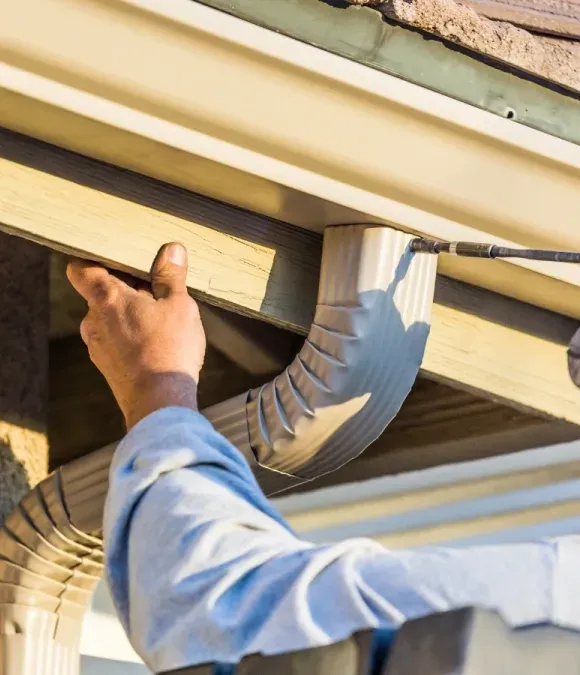
What You Notice Once the New System Is Finished
The replacement process at Townsend Seamless Gutter Company uses aluminum gutter channels paired with stainless steel fasteners throughout—a combination that holds up against the moisture cycling that causes galvanized hardware to rust at the connection point within a few years in higher-humidity seasons. Downspout placement is determined by where water needs to discharge relative to the foundation and yard grade, not by where the previous system had outlets, which means the new configuration is designed for your current drainage conditions rather than copied from a system that may have been installed incorrectly to begin with.
After replacement is complete, the new system drains without overflowing at corners, runs without visible sag along the channel length, and discharges at positioned outlets that move water away from the foundation perimeter. The roofline presents cleanly without the staining patterns that form below failing joints, and the fascia boards—once confirmed sound—are protected from the water contact that caused the previous system's mounting surface to deteriorate. Roofing and construction companies in the Willard and Springfield area schedule replacement work with this company specifically because the installation standard is consistent without requiring oversight.
The decision between a 5-inch and 6-inch replacement system follows the same roof measurement process used for new installations—the square footage of the roof and the spacing between downspout locations determine the correct size. Replacing a failed 5-inch system with another 5-inch system on a roof that generates excess drainage volume doesn't solve the overflow problem that may have contributed to the original system's failure in the first place.

Questions Before Starting Your Gutter Replacement
These questions reflect what Springfield and Willard homeowners typically want answered before committing to a full gutter replacement project.
Why is fascia inspection part of the replacement process?
New gutters mounted against fascia that has already absorbed moisture and begun to soften will pull loose from the mounting surface within a few seasons—identifying and addressing that damage before installation prevents the replacement from developing the same structural failure as the system it replaced.
How does replacing gutters differ from simply repairing the existing system?
Replacement addresses the entire channel run, downspout configuration, and mounting surface in a single process, while repair targets isolated failure points—when multiple sections have failed or when the system is original to an older home, replacement typically produces a more predictable long-term result.
What type of gutter material is used in replacement installations?
Aluminum channels with stainless steel fasteners are the standard because aluminum resists the surface rust that affects steel gutters in wet climates, while stainless fasteners outlast galvanized alternatives at the hanger connection points where corrosion typically begins first.
How does Springfield's climate affect how long a replacement gutter system lasts?
The freeze-thaw cycles that occur through winter in this region stress hanger connections annually—systems installed with proper hanger spacing and stainless fasteners hold their mounting integrity through those cycles significantly longer than systems installed with spike fasteners or at minimum-code hanger spacing.
What factors determine where downspouts are placed on the replacement system?
Foundation grade, landscaping slope, and where water can discharge without pooling against the structure determine outlet positioning—downspouts placed for installation convenience rather than drainage function redirect water to areas where it can work back toward the foundation.
Townsend Seamless Gutter Company has replaced failing gutter systems across Springfield and the surrounding region for 42 years—call (417) 299-1607 to schedule an assessment and get accurate information about what your replacement project requires.